
You know the feeling. The session was good — maybe too good — and now your legs file a complaint every time you take the stairs. A muscle recovery bath soak is a warm bath infused with magnesium-rich salts (usually epsom or other mineral salts) and, often, calming essential oils, designed to help you unwind and ease the sore, tired muscles that follow hard training or a long day on your feet. The real question most people ask: does soaking actually do anything, or is it just warm water with a nice smell?
Short answer: a good soak earns its place in a smart recovery routine. In this guide you'll learn what a recovery soak is and what's in one, what the evidence does and doesn't support, exactly how to use one (water temperature, dose, timing, and duration), how to choose the right soak, and when a soak isn't the tool for the job. Let's get into it.
What Is a Muscle Recovery Bath Soak?
A muscle recovery bath soak is a blend of mineral salts you dissolve in warm bathwater to help your body relax and recover after physical effort. Most recovery bath salts are built around magnesium sulfate (epsom salt) — magnesium plus sulfate — often combined with other mineral salts and essential oils like lavender or eucalyptus for a calming, post-training wind-down.
The people reaching for them are exactly who you'd expect: lifters, runners, weekend athletes, and anyone on their feet all day. What separates a recovery soak from a plain hot bath is the formulation — a purpose-built soak is dosed to deliver a meaningful amount of magnesium-rich salt and a scent profile designed to help you decompress, rather than a handful of whatever's under the sink. Think of it as turning a bath into a deliberate recovery ritual.
Do Muscle Recovery Bath Soaks Actually Work? What the Evidence Says
This is the honest part, and it's where most articles go quiet. A recovery soak is a genuinely useful comfort-and-recovery tool — but it's support, not a cure. Here's what the science actually backs.
The role of warm-water immersion
Warm-water immersion is the part that works regardless of what you add to the tub. Soaking in warm water raises skin and muscle temperature, which can increase local blood flow and help muscles relax, and the simple act of lying in warm water reduces the load gravity puts on your body. Reviews of water immersion and hydrotherapy for delayed-onset muscle soreness (DOMS) suggest immersion can improve how recovered and comfortable people feel after exercise, even if the effects on raw performance markers are modest. For an active person, "I feel looser and more relaxed" is a perfectly valid win.
Magnesium, epsom salt, and sore muscles
Epsom salt is magnesium sulfate, and magnesium is a mineral your body genuinely relies on — it plays an established role in normal muscle and nerve function. That's the rationale behind a magnesium soak: you're pairing the comfort of warm water with a mineral that matters for how muscles work. What's still being researched is exactly how much magnesium the body takes up through the skin during a bath, so we frame this carefully and educationally — a magnesium soak is best understood as a relaxing, recovery-supportive ritual rather than a guaranteed delivery method. Set your expectations there and a soak rarely disappoints; treat it as a miracle and it will.
Bottom line: an epsom salt bath for muscle recovery combines two things that are easy to defend — warm-water relaxation and a magnesium-rich soak — into one low-effort routine. It supports recovery and comfort. It doesn't replace sleep, hydration, and sensible training load.
How to Use a Muscle Recovery Bath Soak (Step by Step)
Getting the most from a muscle recovery bath soak is simple, but a few details make a real difference. Here's the routine, start to finish.
- Fill the tub with comfortably warm water. Aim for pleasantly warm, never scalding — hot enough to relax into, not so hot it's uncomfortable.
- Add the recommended dose of soak. Follow the amount on the pack rather than eyeballing it; the dose is set to give you a meaningful soak.
- Stir to dissolve. Swish the water until the salts fully dissolve so you're soaking in an even blend.
- Soak for 15–20 minutes. This is the sweet spot — long enough to relax and warm the muscles, short enough to stay comfortable.
- Time it well. A soak works beautifully after training or in the evening before bed, when winding down helps both recovery and sleep.
- Hydrate and rinse. Drink water before and after, and rinse off afterward if you prefer.
- Repeat sensibly. A few times a week is a reasonable rhythm for most people — make it part of your routine, not a once-a-month event.
Ready to make recovery a ritual? Shop the Coach Soak muscle recovery bath soaks and dose your next post-training soak properly.
What to Look for in the Best Bath Soak for Muscle Recovery
Not all soaks are built the same. If you're hunting for the best bath soak for muscle recovery, judge it the way you'd judge any piece of recovery kit — on what's actually in it and how it performs.
Ingredients that matter
Start with the label. The best recovery bath salts are transparent about what's inside and lead with quality magnesium-rich and mineral salts rather than padding the bag with cheap fillers or synthetic dyes. Look for a clear ingredient list, a soak built around magnesium/mineral content, and a formulation that tells you it was made with recovery in mind. If a product hides its ingredients, that tells you something too.
Scent, skin feel, and dosing
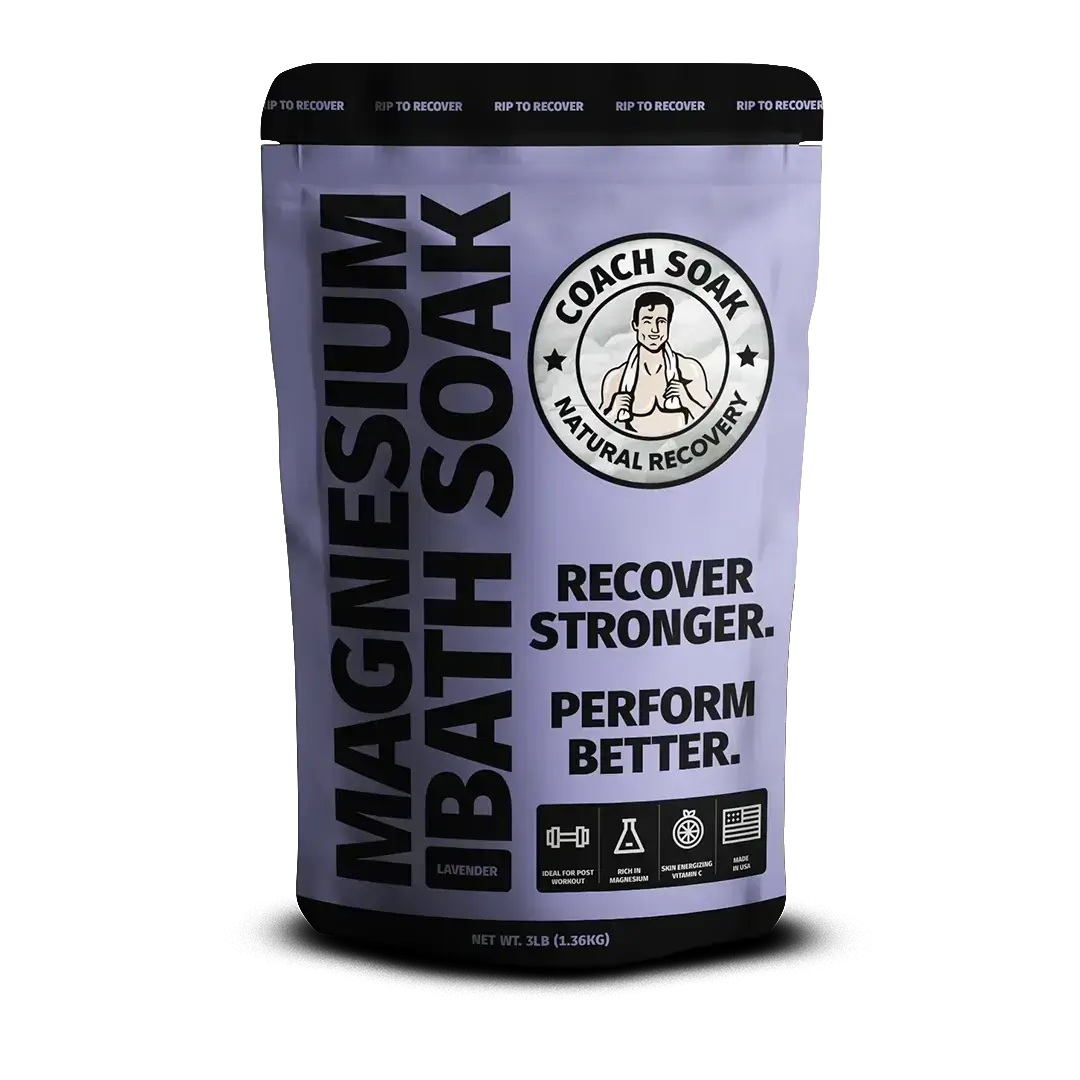
The experience matters because you'll actually use a soak you enjoy. Consider the scent options (eucalyptus and menthol feel invigorating; lavender leans calming), how the water feels on your skin, and — importantly — the dose-per-soak value: how many quality soaks the pack actually delivers. Coach Soak is formulated for athletes and active people who want a recovery soak that pulls its weight, not a novelty bath bomb.
Want a soak that ticks every box? Browse the Coach Soak recovery bath soaks and find the scent and size that fits your routine.
Muscle Recovery Bath Soak vs. Other Recovery Methods
A muscle recovery bath isn't competing with the rest of your recovery toolkit — it complements it. Here's how a soak stacks up against other popular options for easing sore muscles.
| Recovery method | Effort | Cost | Best for | What it helps with |
|---|---|---|---|---|
| Bath soak | Low | Low | Winding down, full-body relaxation | Relaxation, comfort, warming tight muscles |
| Ice bath / cold plunge | High | Medium–high | Acute post-session use | Cooling, perceived soreness relief |
| Foam rolling | Medium | Low | Targeted muscle groups | Mobility, tension release |
| Massage gun | Low–medium | Medium | Spot-treating tight areas | Localised tension, circulation |
| Compression | Low | Medium | After long sessions or travel | Perceived recovery, swelling comfort |
The takeaway: a soak is the low-effort, genuinely relaxing option that pairs happily with everything else. Roll out, plunge, or use the massage gun if that's your thing — then end the day in a soak.
When a Bath Soak Isn't Enough (and Safety Notes)
A soak is a comfort and recovery tool, not a diagnosis. If you have pain that's severe, persistent, or came on suddenly, see a qualified clinician rather than soaking it away. A few sensible cautions: keep the water comfortably warm rather than very hot; take extra care or check with a healthcare professional if you're pregnant, have a medical condition affecting heat tolerance or circulation, or have open wounds or broken skin. And remember a soak is one piece of the puzzle — real recovery is built on sleep, hydration, protein, and managing how hard and often you train.
FAQ — Muscle Recovery Bath Soak
Does a muscle recovery bath soak actually work?
A recovery soak combines warm-water immersion, which can help muscles relax and improve how recovered you feel, with magnesium-rich salts. It's a supportive comfort-and-recovery ritual rather than a cure, and it works best as one part of a wider routine.
What is the best thing to put in a bath for sore muscles?
Magnesium-rich mineral salts such as epsom salt are the classic choice, often blended with essential oils like eucalyptus or lavender. A purpose-built recovery soak is dosed for the job, which is why many people prefer it to loose epsom salt alone.
How long should you soak for muscle recovery?
Around 15–20 minutes in comfortably warm water is the sweet spot. That's long enough to relax and warm the muscles without the water cooling off or the soak becoming uncomfortable.
Is a hot bath good for muscle recovery?
A comfortably warm bath can help muscles relax and support recovery and comfort after training. Keep it warm rather than scalding, and limit very hot water, especially if you have any condition affecting heat tolerance.
How often should you take a recovery soak?
For most people, a few times a week is a sensible rhythm — for example after harder sessions or in the evening to wind down. Make it a consistent part of your recovery routine rather than a one-off.
Make Recovery Part of the Plan
A muscle recovery bath soak won't replace your training fundamentals, but it's one of the easiest, most enjoyable ways to support how your body feels after the work is done — warm water, magnesium-rich salts, and 20 minutes that are genuinely yours. Dial in the temperature, dose it properly, and make it a habit.
Ready to recover like you mean it? Shop Coach Soak muscle recovery bath soaks and turn your next bath into real recovery.